



What is Pin Header
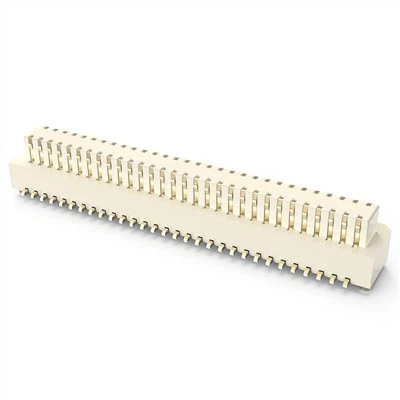
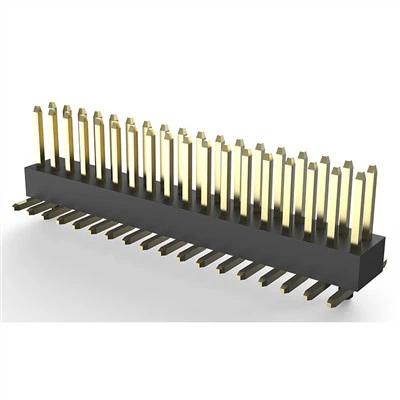
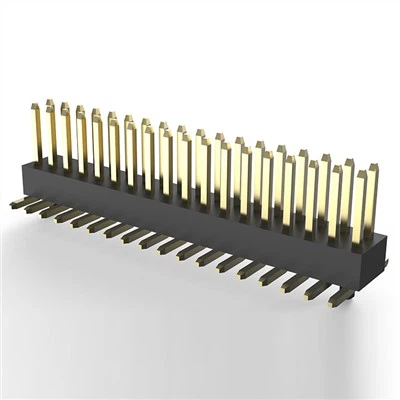
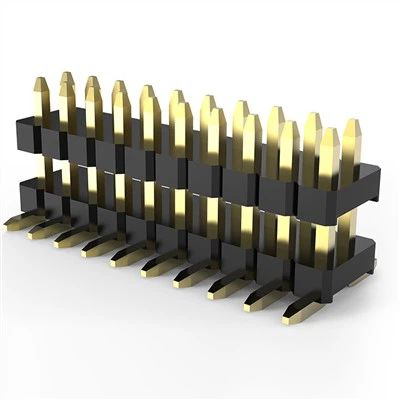
A pin header (or simply header) is a form of electrical connector. A male pin header consists of one or more rows of metal pins molded into a plastic base, often 2.54 mm (0.1 in) apart, though available in many spacings.Male pin headers are cost-effective due to their simplicity. The female counterparts are sometimes known as female headers (also as pin sockets), though there are numerous naming variations of male and female connectors.
Benefits of Pin Header
Removable connections
Pin header allow for components to be easily attached and detached from a PCB without desoldering. This enables modifications, replacements, and changes.
Flexibility
A wide range of pin header styles are available to accommodate various connectivity needs. Pin count, pitch, height, and other factors can be specified.
Reliability
Industrial grade pin header are designed for dependability and durability in demanding environments. Proper mating helps prevent disconnected wires.
Versatility
Pin header have broad applications for connecting peripheral devices, wiring, cables, boards, and more. Standard interfaces enable versatility.
Serviceability
Wires and cables can be changed out or serviced without altering soldered connections on boards. This helps maintenance and repairs.
Cost-effectiveness
Pin header connectors provide a budget-friendly interface option compared to costly custom connectors. They are widely available and reusable.


Product Categories
Latest Products


Why Choose us
Fast Delivery
CNT adopts auto-production, and auto-inspect & package machine which ensures the high quality and efficiency. Both small quantity and big quantity, CNT both could ensure the fast delivery time.
Quality Guaranteed
CNT has passed the certificate of quality system of ISO9001:2015 and IATF16949. All its materials have passed the certifications of ROHS, REACH, and UL.
Cutting-edge technology
CNT has self-owned lab which could full set testing from materials to finished products to guarantee the product quality.
Customer-focused
We prioritize the satisfaction of our clients and make sure their needs are met in a timely and effective manner.
Number of Pins
Pin header are available in a wide range of pin counts, typically from 2 pins up to 100 pins. Higher density pin header packing more pins in compact footprints are also produced. Popular pin numbers include 2, 3, 4, 6, 10, 20, 40, and 50.
The needed pin count depends on the number of interconnections needed. More pins supply flexibility for more wiring terminations.
Pitch or Spacing
Pitch is the distance between pin centers, measured in mm. Standard pitches range from 1.27mm to 2.54mm. High density pin header have pitches of 1mm or less. Pitch must match between pin header and mating connectors.
Common pitches include:
2.54mm – The most popular standard pitch
2mm
1.27mm
1mm or less
Narrower pitches allow more pins in smaller footprints, while wider pitches provide more space for traces and vias on boards.

Pin Lengths
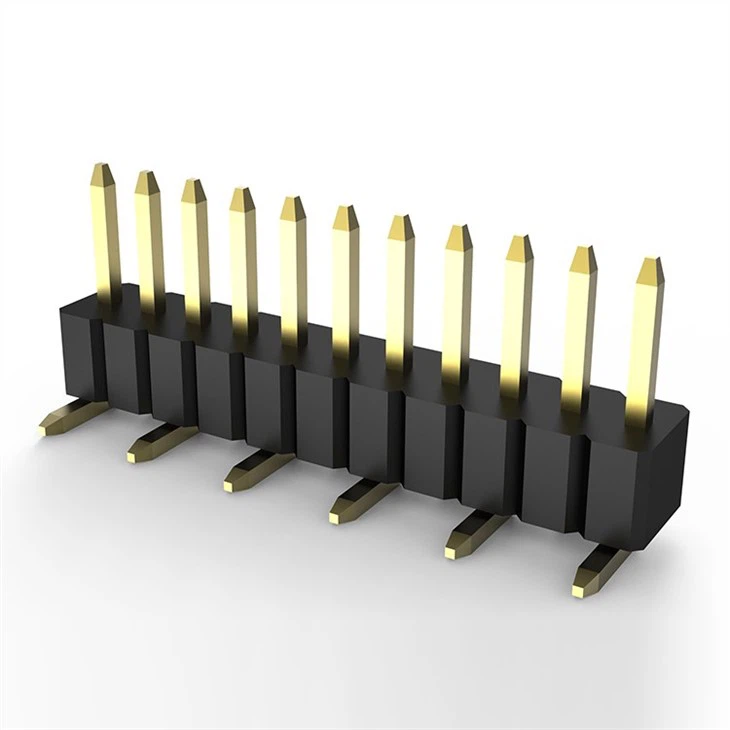
Pin length, measured in mm, determines how far the pins extend from the connector housing. Usual pin lengths range from ~2mm to 12.7mm, but longer versions are available. The ideal length depends on board thickness and component spacing.
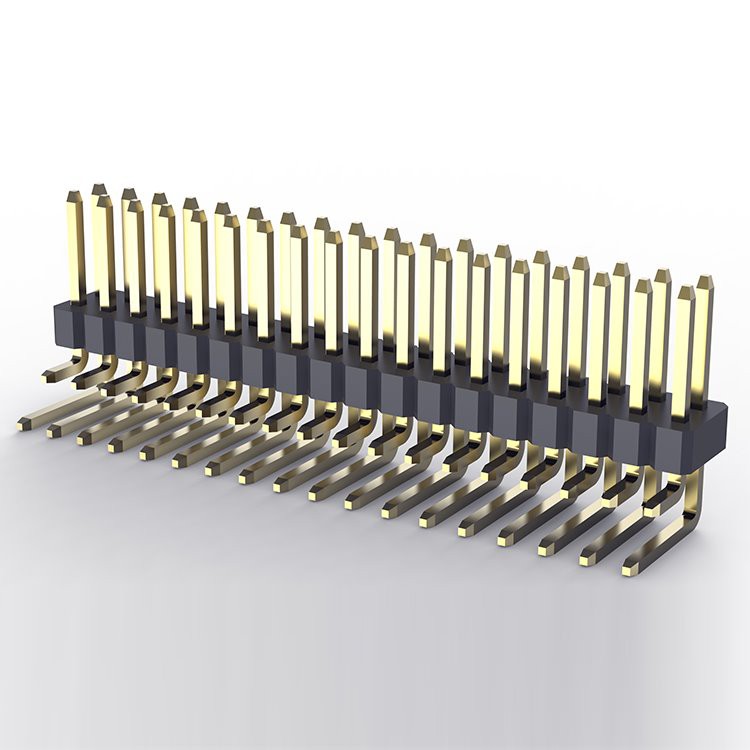
Longer pins provide more flexibility for varying board and component heights. Shorter pins take up less space. Right-angle options are also available.
Row Spacing
For pin header with multiple rows, the row spacing or pitch determines the distance between rows. Typical row spacing is 7.62mm or 5.08mm. Row spacing must match the component or socket being connected.
Pin Diameter
Pin diameter is 0.36mm to 0.64mm. Larger diameters add durability. Smaller pins work for high density applications. Diameter affects current carrying capacity.
Housing Material and Style
Pin header come in nylon, plastic, or fiberglass housings. Key housing choices include:
Single vs. dual row
Straight or right angle
Surface mount or through-hole mount
Shrouded or unshrouded
Housing selection depends on space, board mount type, and insertion/removal needs.
HMI and Panel Mount Displays
Human-machine interface (HMI) panels with integrated displays often use header connectors to link to:
● Touchscreen controllers Display-integrated touchscreen sensors route through header pin connections to controller boards. This allows interchangeability.
● Backlight drivers LED backlight power and controls route through header connectors from driver boards to displays.
● Power Terminals Header pin power terminals enable easy connection of power from external sources to power boards.
● Control Inputs External controls like switches route into displays via header connectors.
● Communications Data cables joining to COM ports use header pin connections for transmission in and out of an HMI display.
Removable cabling through header pin interfaces enables simplified servicing and replacement of HMI components.
POS and Kiosk Displays
Point of sale (POS) systems and interactive kiosks depend on header connectors for:
● Joining peripherals like barcode scanners, cash drawers, card readers, receipt printers, etc.
● Connecting touchscreen overlay components.
● Extending connections for power, video, and data to the main display/PC.
● Linking small interconnect boards back to the main circuit assembly.
Being able to easily detach cables and components makes service and upgrades more straightforward for POS/kiosk systems.

Digital Signage and Video Walls
Video walls, menu boards, and digital signage use header pin connections to:
● Link individual panels together into video wall configurations.
● Connect external media players, video controllers, cameras.
● Join peripherals like touch overlays, sensors, payment terminals, etc.
● Extend power and data connections.
Easily swapping components in and out helps enable flexible digital signage arrangements.
Retail and Restaurant Displays
In retail locations, header connectors are key for:
Connecting peripherals like barcode/QR code scanners, card readers, scales, etc.
● Linking self-service kiosks and price checkers.
● Joining components of smart shelves, smart mirrors, and interactive displays.
● Integrating lighting controls, sensors, security devices.
● Providing standardized power and data termination points.
Being able to modify connections simplifies upgrades and maintenance for constantly evolving store technology.
Medical and Laboratory Displays
● In medical devices and lab equipment, headers provide:
● Sensor/probe connectivity into analysis instruments.
● Touchscreen and user interface connections.
● Video routing from endoscopes/cameras to displays.
● Integration of analytical modules and additional hardware.
Swap-ability of components is crucial for adjusting medical/lab gear and keeping it updated.
Military and Marine Electronics
Rugged displays used in defense, aerospace, and marine settings depend on pin header to enable:
● Quick replacement of damaged display modules in the field.
● Integration of varying modules like radios, tactical interfaces, GPS, etc.
● Connecting peripherals and lights via standard interfaces.
● Reliable power input connections.
Being able to rapidly reconfigure mission-critical systems under harsh conditions is essential.
Test and Measurement Equipment
● For industrial test and measurement systems, headers provide:
● Sensor connections from measurement probes.
● Inputs for signals being analyzed.
● Video outputs to integrated displays.
● Links between stacked circuit boards.
● Connections to data recorders and analyzers.
Headers enable extensive connectivity in complex measurement electronics.


Industrial Control and Automation
Pin header used in industrial automation systems connect:
● Inputs and outputs to/from PLCs and controllers.
● HMIs and their integrated touch panels.
● System components like drives, power supplies, safety controls, sensors, etc.
● External circuits for power, controls, management, etc.
Removable connections aid troubleshooting and replacement of components in automation systems.
Smart Home Devices
Even in smart home devices and appliances, you will see headers used for:
● Connecting integrated touchscreen panels.
● Linking components like control boards, sensors, Wi-Fi modules.
● Providing serviceability access to internal electronics.
● Power and data ingress/egress.
Header pin usage spans the spectrum from complex industrial equipment down to consumer smart home tech.
Pin headers
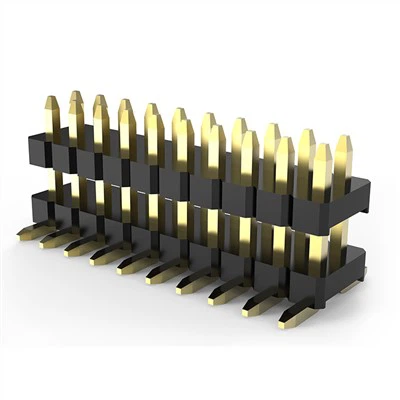
Most designers are familiar with the 1-row or 2-row pin header arrangement with 1 mm pitch. There are variations on this style, including stacked pin headers. Pin headers can be shrouded and keyed (even multi-keyed) to guarantee pinouts match when boards are connected.
Mezzanine connectors
This type of board-to-board connector joins two parallel printed circuit boards in a stacked configuration. There are many mezzanine connector styles. Note that a pin header can be used as a mezzanine connector.
Edge card connectors
This style connector is most commonly known for its use in RAM sticks and COMs/SoMs. Really, it can be used for any board-to-board connection along a board edge, whether with a custom or standardized pinout.
Backplane connectors
This type of connector deserves its own category, both due to its need to accommodate high data rates and very rugged construction.
Standardized connectors
Some connectors may be developed to meet very specific industry standards beyond edge connector styles for add-in cards. Standards organizations that have defined specific connector styles include VITA (for backplanes), PCI-SIG (PCIe cards), IEEE (e.g., 1386 standard for mezzanine), JTAG, PC/104 (square-post pin headers), and others.
3 Tips To Consider When Ordering Pin Header For Your Assembly
Before placing an order, you will need to have your design concept ready. Custom pin header achieve different connection purposes. You can sketch your idea on paper or 2D or 3D CAD for more accurate visualization for final customization.
The main questions to ask yourself when it comes to designing a custom pin from scratch are:
Are You Customizing An Entire New Design Or Part Of An Existing Pin Design?
As mentioned earlier, there are several custom pin designs already. However, when customizing a custom pin, you probably have a unique connection need that the existing contact pin header aren't meeting, either in part or as a whole.
Define the need for a custom pin and the specifications you'll require for the new prototype. This initial consideration is crucial as it helps you and your supplier to explore the best practical ways and methods you can adopt to create the custom pin in design and cost.
What Materials Will It Take To Create The Custom Pin?
The material a contact pin comes in plays a paramount role in its connectivity to other machine parts, service applicability, and final production cost. These materials include those that create the base metal of the pin and any plating you may want on your custom design.
Consider the different properties of different materials and the various ways in which these materials work together to be more effective and applicable for the part of the machine under development.
Once you have the design ready, the next important consideration is where to get your custom pin header produced. Again, you'll want to share this responsibility with a manufacturer who understands every aspect of your design.
An experienced manufacturer should be able to produce quality custom pins that are devoid of flaws. Choose a manufacturer with systems in place to create custom pins including vision inspection processes to ensure your custom pin header diameter, length, thickness, and other parameters as you envision in your design.
Pin header come in varying sizes and shapes, and tolerances in their dimensions guarantee their geometrical tolerances and applicability are accomplished. Choose a company that understands your design concept and can advise and produce a working custom pin that meets the dimensional needs of your connecting parts or machines.
The method by which your custom pin is produced bears a lot of weight on supply and the final cost of production. Depending on the intricacy of your design, you can opt for either of these production methods:
Swaging
The swaging method is best known for producing accurate and efficient custom designs with minimal to zero material losses during manufacturing. This method uses a metal, cold-forming, swaging press and die to progressively form a solid wire or strip of metal into a custom pin design.
Stamping
The stamping method involves using a stamping press and progressive die to shape metal into the desired design. Stamping involves more physical actions on the metal than swaging to achieve the desired. These actions or processes include blanking or punching the metal to for shaping and creating flanges where necessary, embossing, blanking, and coining the metal to achieve dimensional accuracy.
Screw Machining/Turning
The screw machining/turning method involves feeding metal rods through a turning press producing loose piece interconnect pins and contacts. This process creates a lot of metal scrap which adds cost to this fabrication pin forming option.
The above methods produce quality custom pin header but at different timelines and cost implications. Analyze the best equipped and economically and environmentally suited to build your custom pin design, and prepare your order based on the ability of the manufacturer to create and deliver in a time and cost-conscious manner.
With a ready design and production processes in mind, the next thing to do is consider the cost implications for producing the custom pins. Manufacturers will quote for you based on the method and materials they use to create your custom pin. A low-cost quote does not necessarily equal quality production, and neither does a high quote.
Our Factory
CNT was founded in 2007, specializes in design, produce and sale various kinds of electronic connectors: board to board connectors and board to wire connectors. Our products have been widely sold to Europe, Southeast Asia, Hongkong, Taiwan, Mainland China and other districts and countries.
CNT adopts auto-production, and auto-inspect & package machine which ensures the high quality and efficiency. Both small quantity and big quantity, CNT both could ensure the fast delivery time. CNT has passed the certificate of quality system of ISO9001:2015 and IATF16949. All its materials have passed the certifications of ROHS, REACH, and UL. The company has self-owned lab which could full set testing from materials to finished products to guarantee the quality.
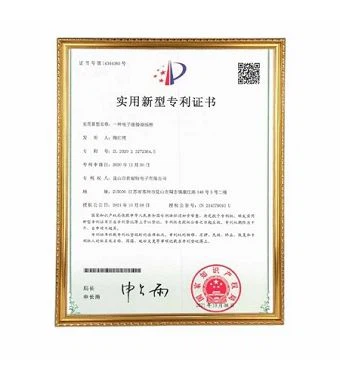
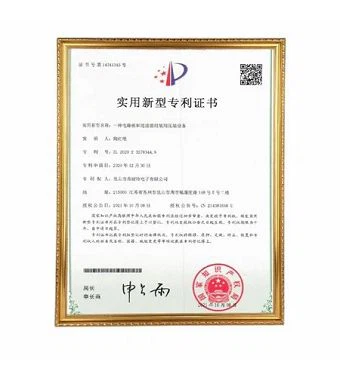
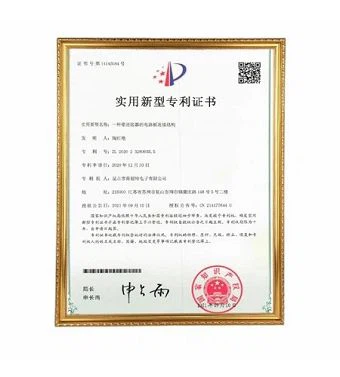
Our products are widely used in Industrial Instrument, Frequency Converter, Stereo Amplifier, CCTV, LED Screen, Smart Meters & Terminals, PCBA, Cell Phone, Househould Appliances, IoT, electric automobile and so on. CNT has obtained 15 national patents till now. And in 2022, CNT was awarded as National High-Tech Enterprise.


Our Certificate
ISO9001, IATF16949, ROHS, REACH, UL


Asked Questions
