



What is Female Header
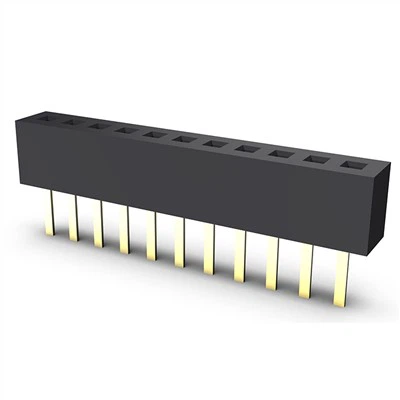
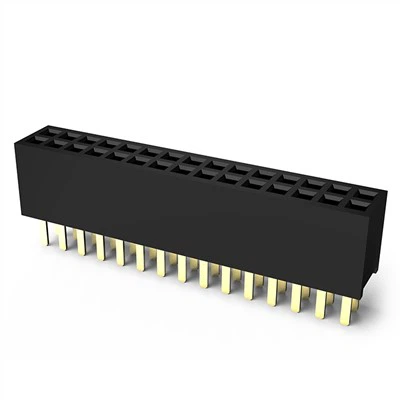
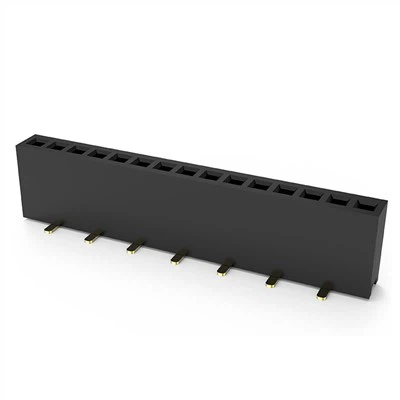
Female headers are the corresponding parts of headers that mate directly to male pin headers. Female headers (often referred to as socket headers) are made of a plastic housing with many sockets where the male pins are meant to fit.
Bayonet Locking Mechanism
One of the standout features of female header is their bayonet locking mechanism. This mechanism consists of a circular coupling nut with two pins that align with corresponding slots on the male connector. To connect the female header and male connector, you simply push and rotate the female connector until it locks in place with a distinct click. This design ensures a secure and reliable connection, making it suitable for applications where vibrations or movement might otherwise loosen traditional connectors.
Coaxial Cable Compatibility
Female header are primarily designed for use with coaxial cables. Coaxial cables consist of a central conductor surrounded by an insulating layer, a metallic shield, and an outer insulating layer. The female header design allows it to maintain the integrity of the coaxial cable's shielding, which is crucial for maintaining signal quality, especially in high-frequency applications.
Versatility
Female header find applications in a wide range of industries, from telecommunications and broadcasting to aerospace and medical equipment. Their versatility is a testament to their reliability and ease of use. They are commonly used for connecting antennas to radios, test equipment, security cameras, and more. Their ability to handle both low and high-frequency signals makes them indispensable in various scenarios.
Quick Disconnect
The bayonet locking mechanism of female header enables quick and hassle-free disconnects. This is especially advantageous in situations where rapid equipment changes or troubleshooting is necessary. Unlike connectors that require intricate threading or special tools for disconnection, female header can be easily removed by pressing the coupling nut and rotating it.





Product Categories
Latest Products


Why Choose us
Fast Delivery
CNT adopts auto-production, and auto-inspect & package machine which ensures the high quality and efficiency. Both small quantity and big quantity, CNT both could ensure the fast delivery time.
Quality Guaranteed
CNT has passed the certificate of quality system of ISO9001:2015 and IATF16949. All its materials have passed the certifications of ROHS, REACH, and UL.
Cutting-edge technology
CNT has self-owned lab which could full set testing from materials to finished products to guarantee the product quality.
Customer-focused
We prioritize the satisfaction of our clients and make sure their needs are met in a timely and effective manner.
Multiple packaging methods for female header pin connectors
Packed in bags: Bagging means encapsulating the connector into a bag according to a certain number. Because the connectors in the bag still rub against each other. Therefore, it is generally not used in expensive and precise connectors. Most of them are used for straight pin headers with small pin positions, 90-degree pin headers, or pin header connectors with shorter contact pins. This packaging method is also the lowest cost.
Boxed: Boxed packaging has better pressure resistance. Compared with the bagged connector, the connector in the box is more stable, avoiding the bending and displacement caused by the backlog of the pin headers.
Tube installation: The tube packaging method is actually a deformation of the box packaging, in simple terms, it is to roll up the film box. The appearance is one tube by tube. It is more suitable for long-pin connectors, which can save space in storage and transportation, and protect the flat and intact surface of the pin header to avoid being broken.
Reeling: Tape and reel packaging has two advantages. One is that the automatic production line can automatically complete the tape and reel packaging, without the need for further packaging steps. Second, when used by customers, the tape-and-reel connectors can be machine-mounted, with high efficiency and high yield. But at the same time packaging costs will be higher.
What Is the Difference Between Male and Female Header?
Male Connectors
Male connectors are also called plugs and typically have pins that protrude from their body. They insert into a female header, where the pins will contact the socket to establish an electrical connection. You'll typically find a male end on cables that carry power or data signals between two devices.
Female Header
Female header feature internal sockets instead of pins. These are recessed holes in the connector that connect to another cable, wire, or device.
The sockets accept the male connector from another device, establishing an electrical connection between them. You'll find female ends on cables or larger devices that receive signals from other devices.
You'll notice that the cable permanently connected to a power source is almost always female. This configuration ensures that humans (or pets) don't touch live conductors, which could cause a short circuit. It also prevents other conductive materials from touching a live conductor.

Common Applications of Female Header
In laboratories and testing facilities, female header are commonly used to connect oscilloscopes, signal generators, spectrum analyzers, and other test and measurement equipment to the devices under test. Their ability to handle high-frequency signals with minimal signal loss makes them ideal for precise measurements.
In the broadcasting and audiovisual industry, female header are used for transmitting video signals. Cameras, monitors, and video switchers often feature female header for video input and output. The 75-ohm female header are particularly well-suited for these applications, ensuring high-quality video transmission.
Female header are prevalent in the aerospace and defense sectors, where they are used in radar systems, avionics, and communication equipment. The secure locking mechanism and ability to maintain signal integrity even in harsh conditions make female header a reliable choice in these critical applications.
Telecommunication networks rely on female header to connect various components, such as antennas, routers, and signal amplifiers. Their ease of use and ability to handle both digital and analog signals make them a preferred choice for telecom installations.
Female header are widely used in security and surveillance systems to connect cameras to monitoring equipment. The quick-connect feature allows for easy installation and maintenance of surveillance systems, ensuring continuous security monitoring.
Female Header Care Tips
Visual Inspection
Check and make sure there is no visible damage or debris in the female header. Look for concentricity in the center pins.
Inspecting Interfaces
Check for signs of damage including scoring or dents on outer conductor, center pins, and dielectric surfaces. Center contacts should be present, straight, and centered. The contact pin should not be loose or cross-threaded. Contact shoulders should be sharply defined with flat edges and no rolled or mushroomed edges. If there are signs of damage, cables should not be used.
Interface Thread Inspection
Make sure there are no signs of cross-threading or broken or missing threads. Do not connect them with any female header or interface gauge if there are signs of damage.
Interface Cleaning
Use a clean, soft, lint-free swab, like a cotton swab, lightly moistened with isopropyl alcohol to remove dirt, dust, and other debris.
Clean the female header threads. Make sure alcohol does not come into contact with the dielectrics or gaskets; this can cause VSWR, phase or insertion loss problems.
Allow the isopropyl alcohol to evaporate. Dry threads with containerized compressed air. Make sure female header are dry and free of visible debris before use.
Interface Gauging
Start with clean interfaces that meet specifications for pin depths . For preventative maintenance, have female header gauged periodically on a fixed schedule set for every 100 mating cycles or every week. Make sure gages are calibrated. Following these procedures will insure that cables and female header will not damage interfaces, including test ports.
Interface gages are important to measure pin depths and to make sure pin depths do not have excessive recession or protrusion, but they only provide rough measurements. Plug gages provide more measurement uncertainty than threaded gages. See Table for interface reference planes.
Female Header Troubleshooting Tips
No Signal
If you experience a loss of signal, check for loose or disconnected female header. Ensure that the connectors are properly mated and the locking mechanism is engaged.
Signal Degradation
If you notice signal degradation, inspect the coaxial cable for damage or interference. Replace any damaged cables and ensure proper grounding.
Intermittent Connection
If the connection is intermittent, inspect the connector for signs of wear or bent pins. Replace damaged connectors as needed.
How To Choose The Perfect Female Header For Your Requirement
The type of signal being carried
Consider whether the signals are power signals or data signals. In case of power signals, the voltages, frequencies, and currents being carried also matter while choosing the specifications of the female header. If you are using fiber optic cables, this is also a major aspect in choosing the female header.
The operating conditions
The conditions in which the system is working will dictate the kind of female header you will need. For instance, the amount of vibrations and shock that the cable assembly will be subjected to must be considered while choosing the female header. For example, female header with threaded coupling are more protected against harsh operating conditions compared to push-pull connectors.
If the system is in a place with high temperatures or if the female header are near a heat source, then the female header should come with proper insulation to withstand the heat and also for safely connecting and disconnecting whenever needed.
The Ingress Protection factor
Female header need environmental protection depending upon the kind of ingress they are exposed to. The Ingress Protection (IP) factor tells you how protected the female header is against external factors such as water, dust, oils, etc. While some female header need protection only against the occasional sprinkles of water, some might need to be watertight. Some female header, for example, used in subsea environments, might be exposed to high-pressure water currents. Same goes with dust and dirt. So, depending on the kind of environment the female header is going to be used in, you will need the IP rating. Bulgin provides high-quality watertight power female header such as the 4000 Series Buccaneer.
The size of the female header
Some applications are more size-specific than others. When compact electrical systems are required due to space constraints, the female header also need to be of smaller sizes. Compact female header that small in size but do not compromise on the quality of the connectivity are needed.
How regular would the mating and unmating be
Each female header comes with a set number of mating cycles. It basically means that the female header can be connected and disconnected a given number of times and still provide good reliability. Some female header are designed to be mated once and not disconnected for its entire lifetime, while others may need more frequent connecting and disconnecting. Obviously, in applications where frequent mating and unmating is required, you will need a female header with higher mating cycles.
The durability of the female header
Depending on the expected lifecycle of the system, the durability of the female header is also an important factor. Most systems will need a long-lasting female header and a specification known as the MTBF (Mean Time Before Failure) will give you a fair idea whether the female header would be suitable for your requirement. It gives a fair idea about how long the female header will last before it is too old to be used reliably.
Industry standards
In certain industries, specified standards need to be met by all the components including the female header. It would do to check what kind of industry-specific requirements are to be met by the female header. For instance, in the pharmaceutical industry, the female header might need to be sterilized from time to time.
While selecting female header, reliability is always one of the primary considerations. Robust, ruggedly designed connectors that can provide good connection stability will complement the overall stability of your system. Choosing the right female header will give your electrical systems better stability and help them perform efficiently.
Female Header Technical Specifications

Impedance
Female header are available in different impedance ratings, with 50 ohms and 75 ohms being the most common. The choice of impedance depends on the application. Female header with a 50-ohm impedance are typically used in high-frequency applications, while 75-ohm connectors are commonly used in video and broadcast applications.
Frequency Range
The frequency range that a female header can support is another critical factor to consider. In general, female header are suitable for frequencies ranging from a few megahertz to several gigahertz. The specific frequency range may vary depending on the connector's design and quality.
Connector Material
Female header can be constructed from various materials, including brass, stainless steel, and plastic. The choice of material can impact the connector's durability and suitability for different environments. For instance, stainless steel connectors are more corrosion-resistant and suitable for outdoor applications.
Mounting Options
Female header come in various mounting options, including bulkhead, panel-mount, and cable-mount configurations. The choice of mounting option depends on how and where the connector will be installed. Panel-mount connectors are suitable for securing connectors to enclosures, while cable-mount connectors are ideal for attaching connectors directly to cables.
Our Factory
CNT was founded in 2007, specializes in design, produce and sale various kinds of electronic connectors: board to board connectors and board to wire connectors. Our products have been widely sold to Europe, Southeast Asia, Hongkong, Taiwan, Mainland China and other districts and countries.
CNT adopts auto-production, and auto-inspect & package machine which ensures the high quality and efficiency. Both small quantity and big quantity, CNT both could ensure the fast delivery time. CNT has passed the certificate of quality system of ISO9001:2015 and IATF16949. All its materials have passed the certifications of ROHS, REACH, and UL. The company has self-owned lab which could full set testing from materials to finished products to guarantee the quality.
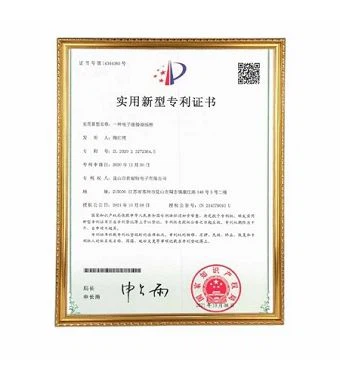
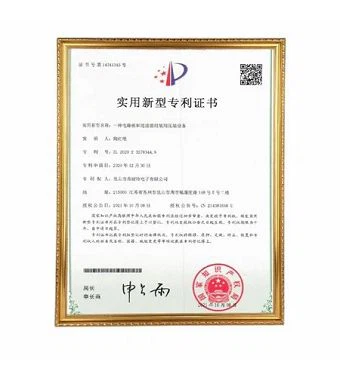
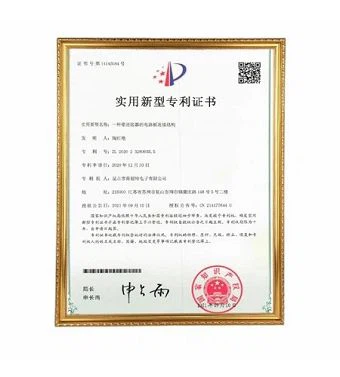
Our products are widely used in Industrial Instrument, Frequency Converter, Stereo Amplifier, CCTV, LED Screen, Smart Meters & Terminals, PCBA, Cell Phone, Househould Appliances, IoT, electric automobile and so on. CNT has obtained 15 national patents till now. And in 2022, CNT was awarded as National High-Tech Enterprise.


Our Certificate
ISO9001, IATF16949, ROHS, REACH, UL


Asked Questions
